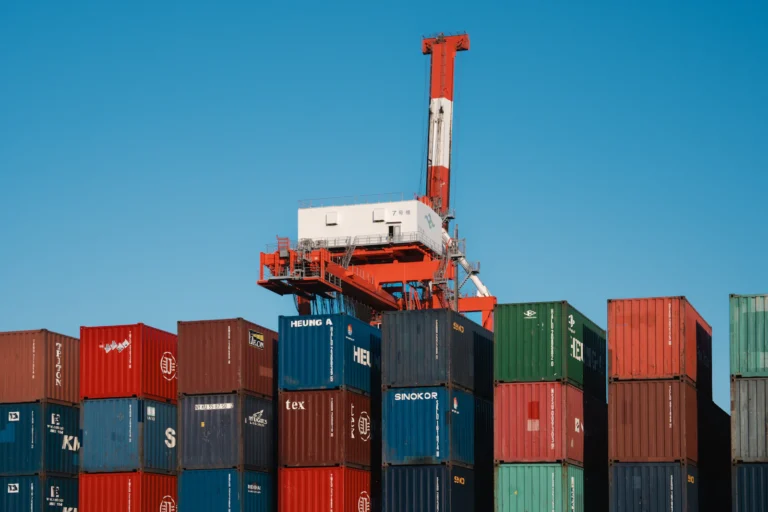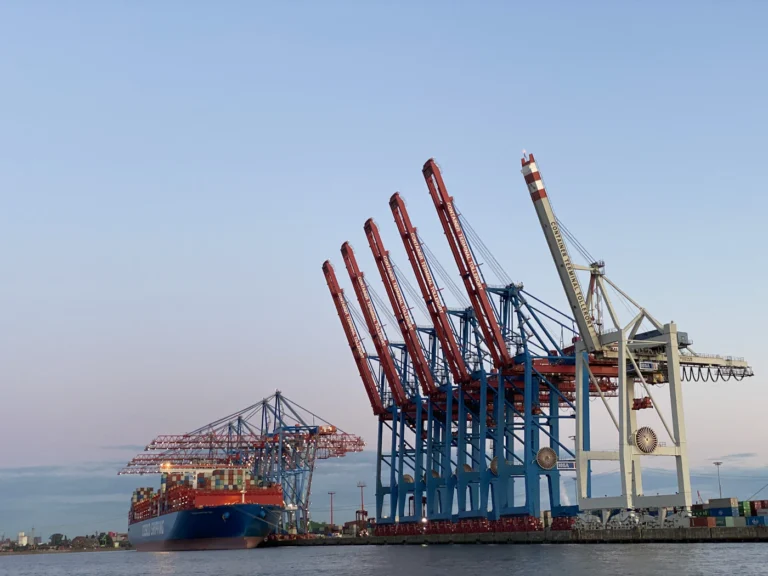
Container types are the standardized variants of the box that moves world trade. The most common are the 20 and 40 foot standard, the high cube (40 foot with extra height) and the specials: refrigerated (reefer), open top for tall cargo and flat rack for anything that will not fit in a closed box. Below are all nine, each with its figure and its dimensions.
The 9 types, with their dimensions
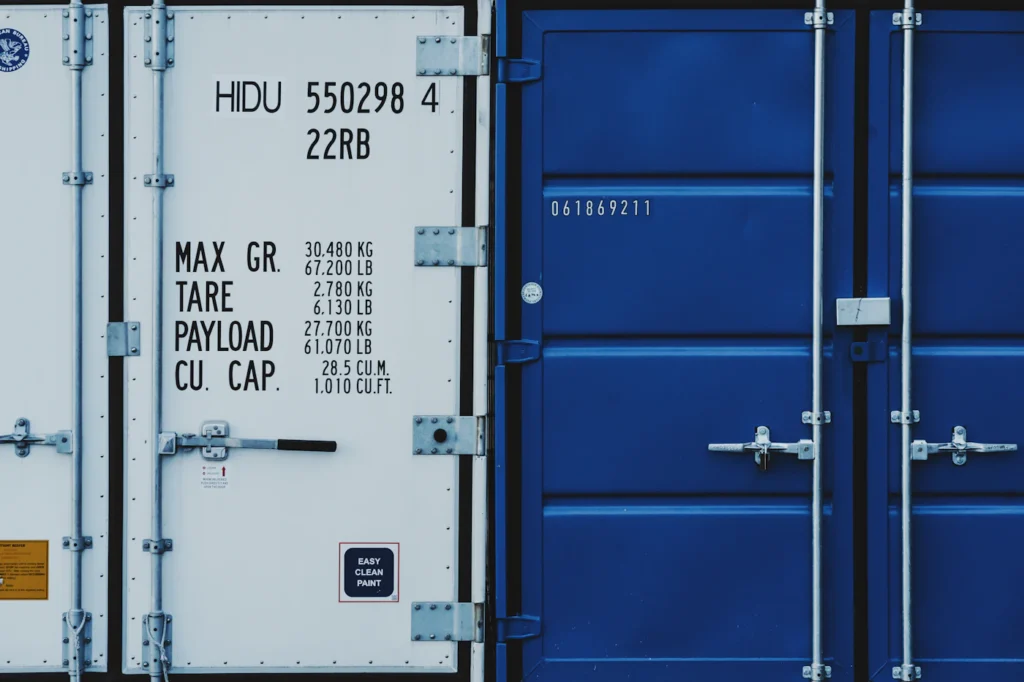
All nine figures are drawn at the same scale: the 20′ looks half the 40′ because it is. Tap each one to open it. The figures come from a sample series of the Hapag-Lloyd fleet; each carrier and each build year changes them by a few millimeters and kilos, so for an actual shipment the CSC plate of the assigned container is what counts.
20′ standard (20′ DV)
The basic dry box: closed, corrugated steel, doors at one end. It suits dense cargo such as hardware, ceramics, metals or small machinery, which reaches the weight limit before it fills the space. Many 20′ units have forklift pockets in the base so they can be moved empty with a forklift.
| Item | Value |
|---|---|
| Inside dimensions | 5,900 × 2,352 × 2,393 mm |
| Door opening | 2,340 × 2,292 mm |
| Capacity | 33.2 m³ |
| Tare | 2,300 kg |
| Max. payload | 30,200 kg |
| Max. gross weight | 32,500 kg |
40′ standard (40′ DV)
The same width and height as the 20′, twice the length. It works for general cargo of medium volume. Its maximum payload is almost the same as the 20′: what you gain is space, not weight.
| Item | Value |
|---|---|
| Inside dimensions | 12,032 × 2,352 × 2,395 mm |
| Door opening | 2,340 × 2,292 mm |
| Capacity | 67.7 m³ |
| Tare | 3,700 kg |
| Max. payload | 28,800 kg |
| Max. gross weight | 32,500 kg |
40′ High Cube (40′ HC)
Like the 40′ standard but 30 cm taller, outside and inside: 9’6” against 8’6”. It is one of the most requested boxes for light, bulky cargo from China, such as furniture, electronics, textiles or plastics. Before booking it, confirm the total height on the chassis for the trucking leg at destination.
| Item | Value |
|---|---|
| Inside dimensions | 12,032 × 2,352 × 2,700 mm |
| Door opening | 2,340 × 2,597 mm |
| Capacity | 76.3 m³ |
| Tare | 3,850 kg |
| Max. payload | 28,650 kg |
| Max. gross weight | 32,500 kg |
45′ High Cube (45′ HC)
1.52 m longer than the 40′, with High Cube height: it adds about 10 m³ over the 40′ HC. Not every route or carrier offers it, and at destination you need to confirm the length is allowed on the trucking leg.
| Item | Value |
|---|---|
| Inside dimensions | 13,556 × 2,352 × 2,700 mm |
| Door opening | 2,340 × 2,597 mm |
| Capacity | 86.0 m³ |
| Tare | 4,700 kg |
| Max. payload | 27,800 kg |
| Max. gross weight | 32,500 kg |
Refrigerated (40′ reefer High Cube)
An insulated box with its own cooling unit at the front, plugged into power at the terminal and on board. The insulation makes it narrower inside than a dry box, and cargo stays below the red line: cold air has to flow through the T-floor and above the goods. It is built to hold a temperature, not to bring it down, so cargo has to arrive already at its transport temperature.
| Item | Value |
|---|---|
| Inside dimensions | 11,578 × 2,280 × 2,525 mm |
| Max. stowage height | 2,425 mm |
| Door opening | 2,276 × 2,535 mm |
| Capacity | 66.7 m³ |
| Tare | 4,300 kg |
| Max. payload | 29,700 kg |
| Max. gross weight | 34,000 kg |
| Temperature range | −40 °C to +30 °C |
Open top (40′)
Walls like a dry box, but no rigid roof: a removable tarp over roof bows. It is loaded from above by crane, for pieces that do not fit through the door or stand taller than the box. If the piece sticks out above the height, the shipment is quoted as out-of-gauge cargo.
| Item | Value |
|---|---|
| Inside dimensions | 12,029 × 2,350 × 2,380 mm |
| Capacity | 66.5 m³ |
| Tare | 4,050 kg |
| Max. payload | 28,450 kg |
| Max. gross weight | 32,500 kg |
| Roof | Lona removible sobre arcos |
Flat rack (40′ High Cube)
A reinforced deck with two end walls and no side walls or roof. It is for heavy machinery, vehicles, coils or transformers, loaded from above or from the side and lashed to the deck rings. It takes cargo taller and wider than the box, with a surcharge and special stowage on board. In the Hapag-Lloyd series the end walls fold down.
| Item | Value |
|---|---|
| Length between posts | 11,652 mm |
| Width between posts | 2,224 mm |
| Floor to top height | 2,248 mm |
| Deck height | 648 mm |
| Tare | 5,950 kg |
| Max. payload | 44,050 kg |
| Max. gross weight | 50,000 kg |
Platform (40′)
Just the deck, no end walls: in many fleets it is a flat rack with its end walls folded down. It carries very long, wide or heavy pieces that will not take any wall, such as boilers, steel structures or boat hulls. All the load sits on the beam, so weight distribution is planned piece by piece.
| Item | Value |
|---|---|
| Deck | 12,192 × 2,245 mm |
| Deck height | 648 mm |
| Tare | 5,950 kg |
| Max. payload | 44,050 kg |
| Max. gross weight | 50,000 kg |
ISO tank (20′)
A cylindrical vessel, usually stainless steel, inside a frame with the size and corner castings of a 20′ container. It carries bulk liquids: chemicals, oils or liquid food. It is not filled to the top or halfway: it is normally loaded between 80 and 95 % of capacity so the liquid does not surge against the walls in transit. If the product is hazardous, the dangerous goods rules apply.
| Item | Value |
|---|---|
| External dimensions | 6,096 × 2,438 × 2,591 mm |
| Nominal capacity | 24,000 L |
| Tare | 3,600 kg |
| Max. payload | 32,400 kg |
| Max. gross weight | 36,000 kg |
| Usual filling | 80 to 95 % |
Which one fits which cargo
The 40 foot and the high cube dominate general cargo; the 20 foot suits dense goods that hit the weight limit before filling the volume. The reefer keeps the cold chain with its own unit, and open top and flat rack solve machinery and out-of-gauge pieces, with the handling and rates of project cargo.
Why it matters when importing from China
When quoting FCL and when planning the load: the type and size of the box define how much fits, how it is stowed and what the freight costs. Good cubing sometimes saves an entire container; bad cubing sends paid-for air across the Pacific.
The common mistake
Cubing with the container’s external dimensions, or ignoring the weight limit. What rules are the internal dimensions, the door opening and the weight caps per container and per road at destination: filling a heavy cargo to the volume limit can leave you over the legal weight on the trucking leg.
Send us your packing list and we tell you which container fits and how to stow it: write to us or quote sea freight directly.
Source: Hapag-Lloyd, Container Specification (sample series of its fleet); ISO tank: OEG, ISO tanks datasheet. External dimensions per ISO 668.